
Collapse
On Monday January 11th in 2016 Madaya, a Syrian mountain town near the Lebanese border, catches its breath and regains some hope. About fifty UN and Red Cross trucks arrive, loaded with food supplies. Besieged by Syrian troops the people of Madaya had not received humanitarian relief in three months. 28 of the 40,000 souls of Madaya have already died of starvation according to Doctors without Borders. Bassel has been in Madaya for two years, before living in Zabadani, not far from there. Ironically he had escaped from his city, surrounded by Hezbollah's militia and the Syrian army, to reach Madaya. To lay siege to cities is the preferred strategy used by both the regime and the rebels. This is the case of Madaya and Zabadani, a majority Sunni city in the rural surroundings of Damascus.
Having learned from the past, he knows that he must not waste anything and says: I will ration my meals as much as possible, a glass of ingredients a day. The last time the aid had arrived, they had promised us a second delivery, but it never arrived. Yesterday they promised us that a second delivery will arrive on Thursday, but I prefer not to risk it. Today we eat, but tomorrow we will be hungry again. In February Bassel had managed to escape from besieged Madaya. He had found himself in the Lebanese Békaa and in March he told us how he hoped to reach his family in Germany. Five months later Bassel still does not see the end of the tunnel. Bassel and his family have had more luck than many of their neighbors, who have died of the cold, starvation or lack of healthcare in this ghost town on the outskirts of Damascus. His family managed to reach Germany, but he stayed behind. Bassel also suffers physically: a backache persists. Before the start of the 2011 Syrian revolution, I was in prison for 4 years, starting in 2000. I went to Saydnaya Prison, where they tortured me. A military court sentenced me to three and a half years in prison for membership in a forbidden religious organization. It is the Takfir wal Hijra movement, a branch of the Muslim Brothers founded in 1970. This claim is fabricated and not true. Bassel had also been deprived of his civil rights until 2011. Then the war broke out, and I could not present myself before the Syrian authorities to claim my civil rights. ”Why is all of this happening to us? Why have we been abandoned? exclaims Bassel. He blames the rebels - which he supports as a partisan - of being divided, of not being able to close the ranks in the fight against the regime. However the harshest words he has for the Syrian regime: They leave us only the choice between starvation and submission. Under these life conditions some inhabitants have not been able to resist the regime. Many people have resigned and joined Bashar’s army. says Bassel. When I asked them ‘Why?’ they answered me: What would you have us do? Either we do this or our children will starve to death. On February 18th Doctors without Borders reported, that 49 people had died of starvation between December and February in Madaya. The unreported deaths are believed to be higher, due to citizens not receiving medical attention and dying in their own homes. The so-called medical convoys and ambulances you see on TV are only masquerade”, Bassel says. Do you believe that this is enough to save all these hungry people? I saw the children with their skin stuck to their bones and with swollen bellies. Mediated by a friend Bassel contacts a trafficker, but ends up abandoned. I had paid him $2200 after selling the furniture and items in the store, that I'd once run. Fortunately I managed to recover part of the sum. I then contacted a second trafficker, to whom I gave all that was left to me. A fortnight later, when I already lost hope, they called me to say that the time had come. I left home without bringing anything with me, I only had identification documents.
That night of February 7th they were eight trying their luck. The road was full of anti-personnel mines, we marched in a single file. In the darkness we managed to go unnoticed 50 meters from an army blockade. We were lucky, no one was injured in this six-hour march. At dawn we climbed to the top of a mountain. After another six hours of walking we found a cave, where we spent the night. The following day inhabitants of the border region took me in. The day after that we arrived in Lebanon. Bassel prefers not to reveal the details of this adventure, so as not to compromise those, who will try to follow the same path in the future. This trip cost him $3000. Lebanon should have been only a stopover for this father, who tries at all cost to reach his family in Germany via Turkey. But this option is very complicated, given that many European countries have decided not to allow refugees to pass anymore. Turkey has recently urged the European Union to do the same. Bassel feels like living in an open-air prison in Lebanon, where he avoids moving around out of fear of getting arrested. What I want is just to reach Turkey to go to Europe and be reunited with my family , he insists. In the meantime he came into contact with the UN High Commissioner for Refugees to register as asylum seeker and try to obtain grants. Today Bassel has finally reached Berlin, after a grueling and dangerous journey on a truck. We met at the VHS language school, where he told us part of his intense story. Shared Frame is excited to be able to tell it through music and images.
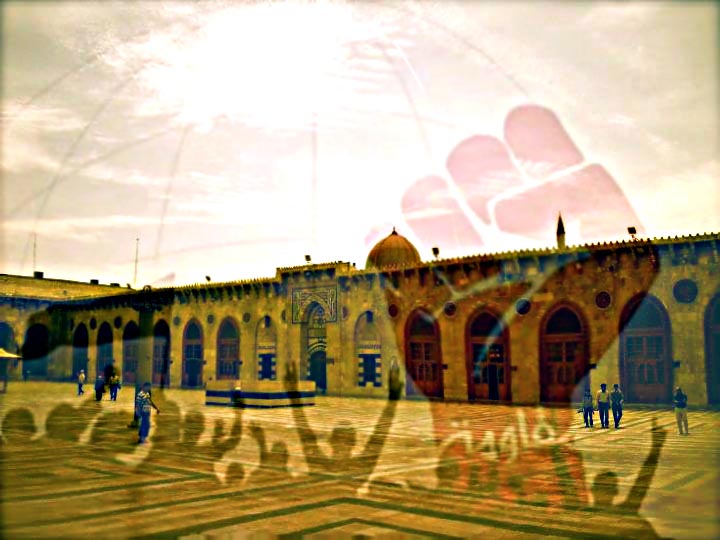
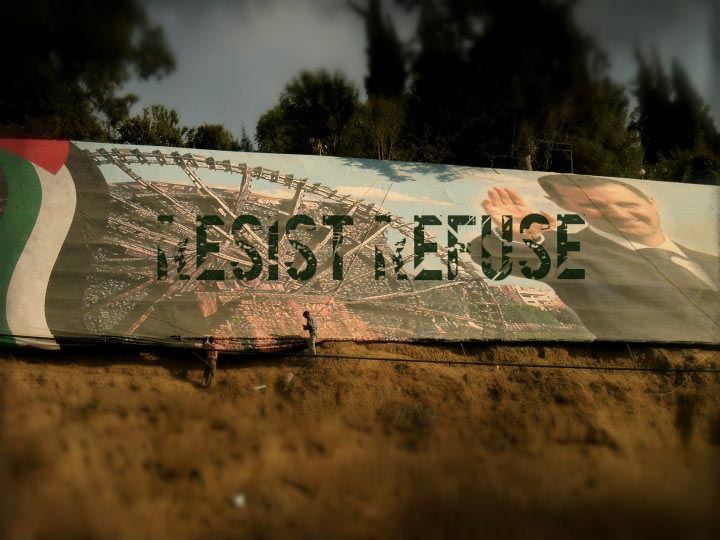
This first video was made following the rediscovery of some of my footage from a trip to Syria (Aleppo and Hama) in 2010 just before the war. At that time I lived in Istanbul and decided to visit my roommate and his family in Dörtyol (Hatay), a town close to Syria. Shortly after I took my backpack and arrived in Aleppo. I spent around a week in the country and made some videos, unaware that a war would be breaking out only a few months later. After starting the Shared Frame project, I decided to create this video giving a small tribute to the Syrian people and telling one of the many stories related to this war and the destruction of the cities.